
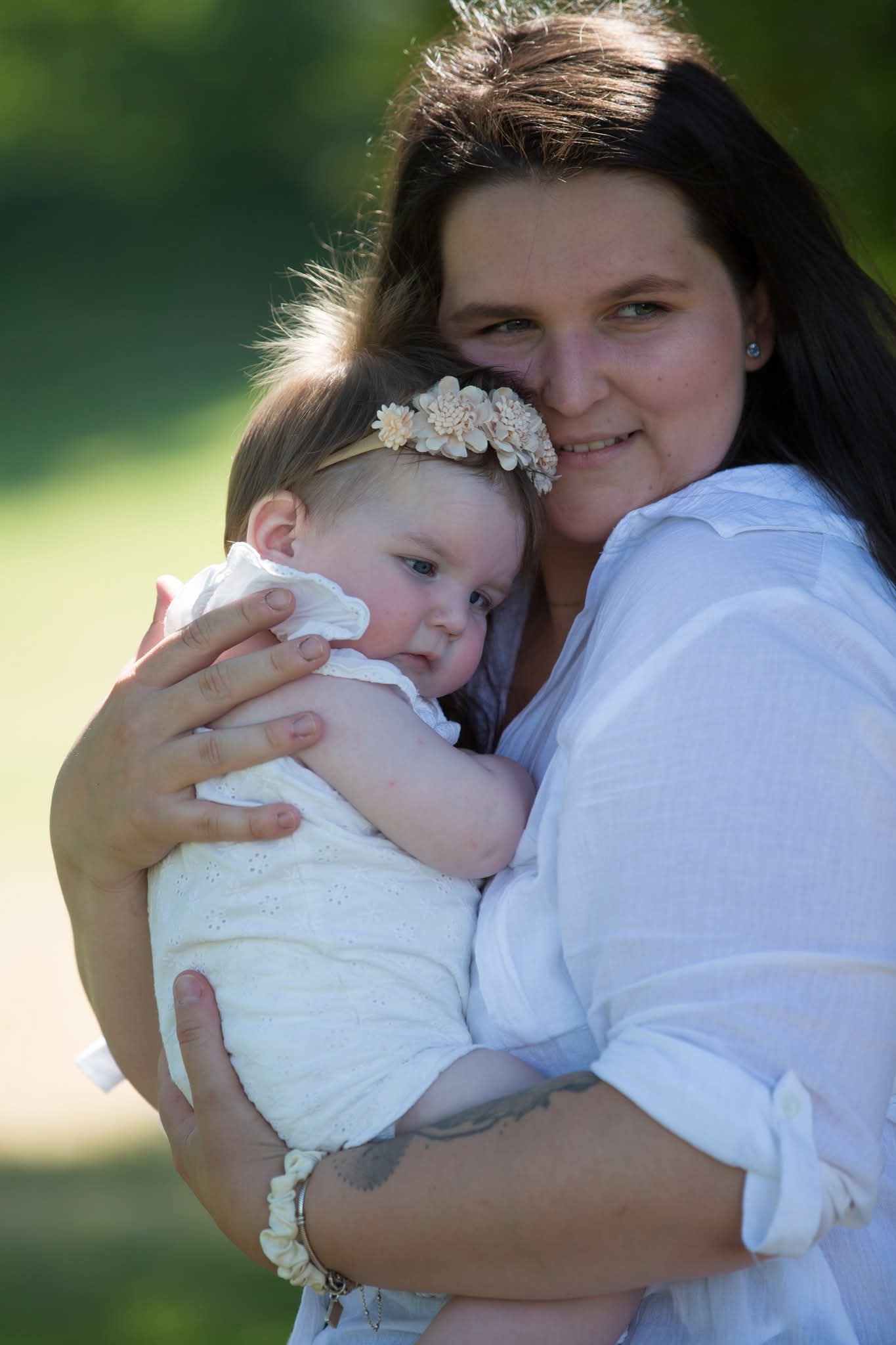
PIASTM Therapy Success Story: Ajda’s Journey to Better Movement
A Parent’s Search for Hope Through PIASTM Therapy
For parents of children with neurological and developmental challenges, every small movement becomes a milestone. The first roll, improved head control, relaxed muscles, or even the desire to explore the world can feel life-changing.
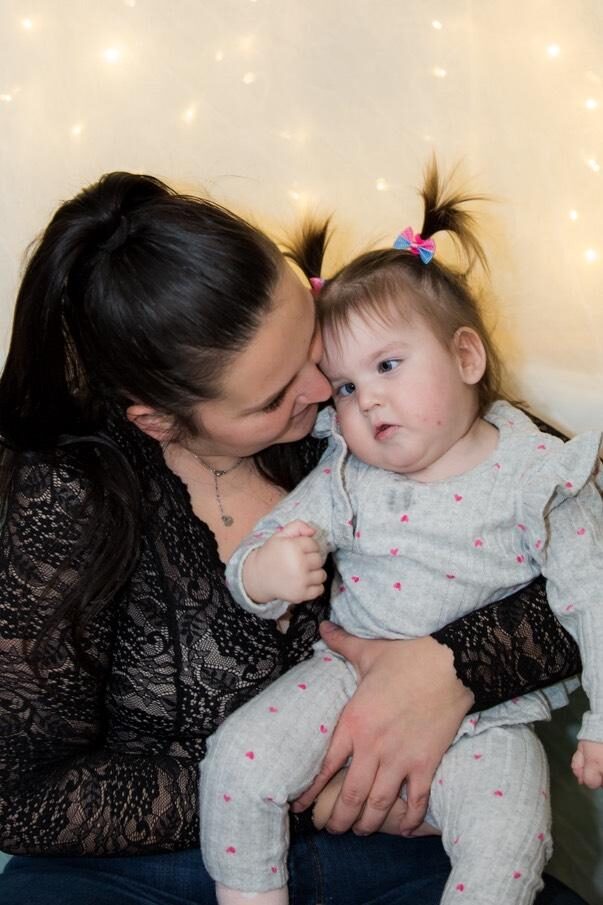
This is the story of Ajda — a beautiful little girl whose journey with PIASTM Therapy by Kanu Kaushik transformed not only her movement, but also her confidence, curiosity, and independence.
Discovering PIASTM Therapy
We first heard about PIASTM therapy through another parent of a child with special needs. Like many families navigating neurological rehabilitation, we were constantly searching for something that could genuinely help our daughter progress.
We reached out immediately and were fortunate enough to get an evaluation on the very same day, as the therapy team was leaving the next morning. We were given two options:
- Travel to Macedonia in one month for therapy
- Or wait almost six months for their return in my home country
At that time, Ajda was only 10 months old.
To be honest, we were extremely skeptical. An 11-hour journey with a baby felt overwhelming. But deep down, we understood something important:
Early intervention can change everything.
We knew that if there was even a small possibility that PIASTM therapy could help Ajda move better, we wanted to begin as early as possible.
Before PIASTM Therapy
Before starting therapy, Ajda’s movement was very limited.
She could occasionally roll from her back onto her tummy, but only with support, and she became tired very quickly. Her head control was still weak, and muscle stiffness restricted many natural movement patterns.
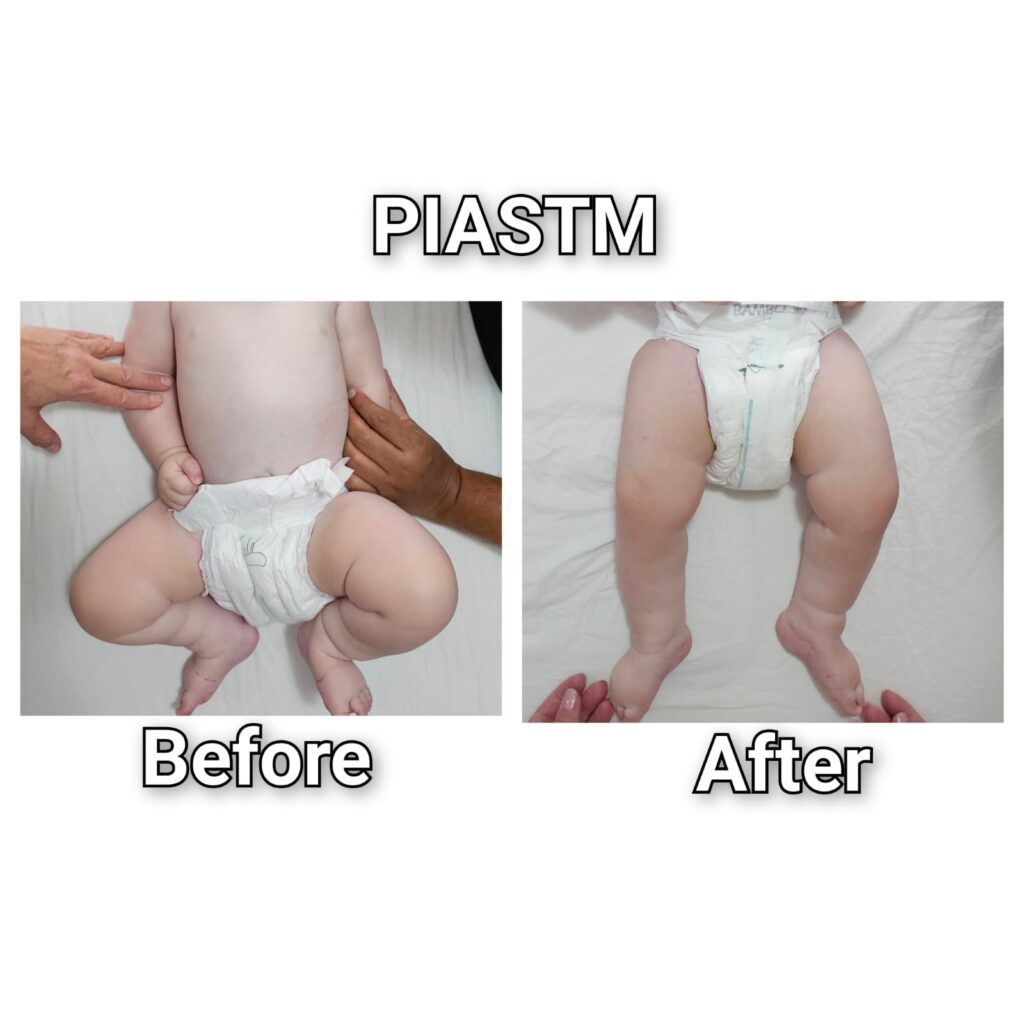
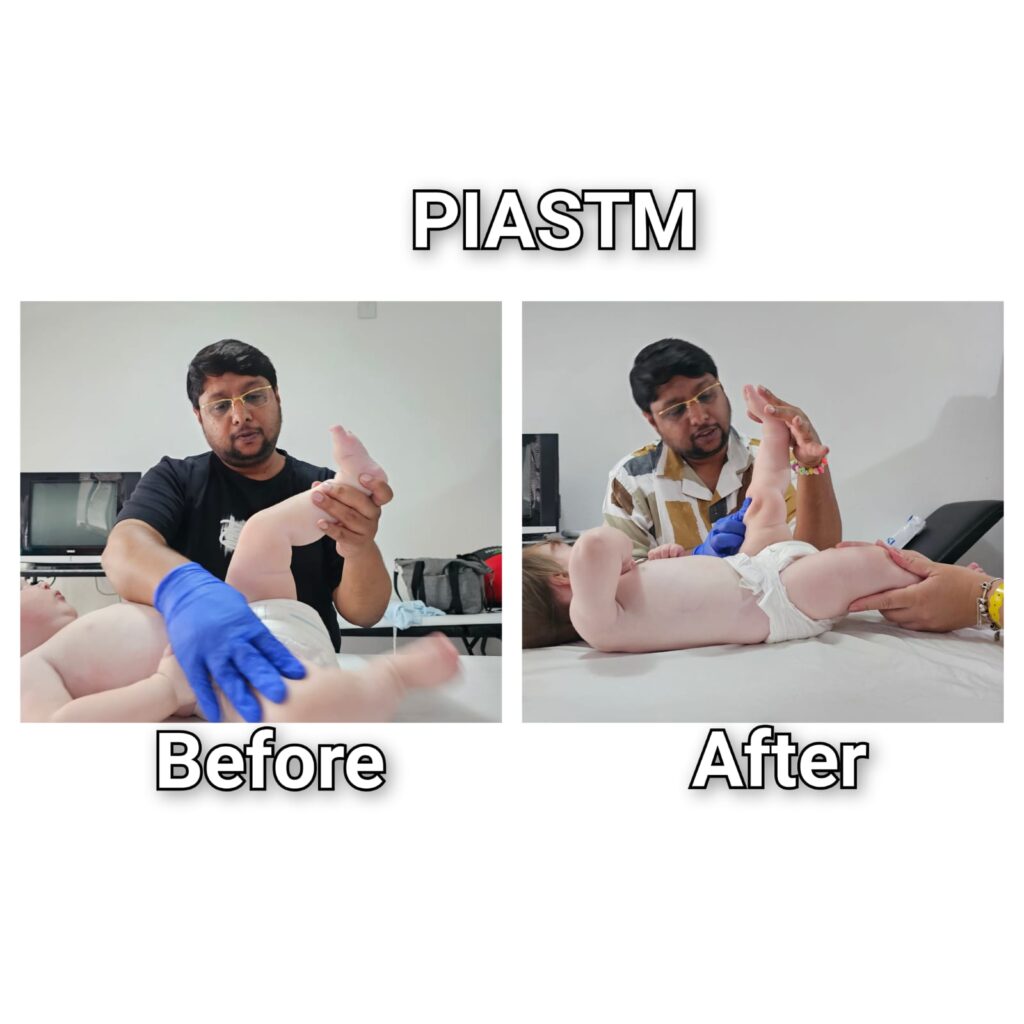
One of the most noticeable concerns was the constant tightness in her lower body. Her legs remained in a “frog position” most of the time due to muscle tightness and poor relaxation.
As parents, watching your child struggle with simple movements is emotionally difficult. We wanted to give her every opportunity possible to experience movement freely.
The First 4-Day Intensive PIASTM Therapy
Everything began to change after the very first 4-day intensive PIASTM therapy program.
Almost immediately, we noticed visible differences.
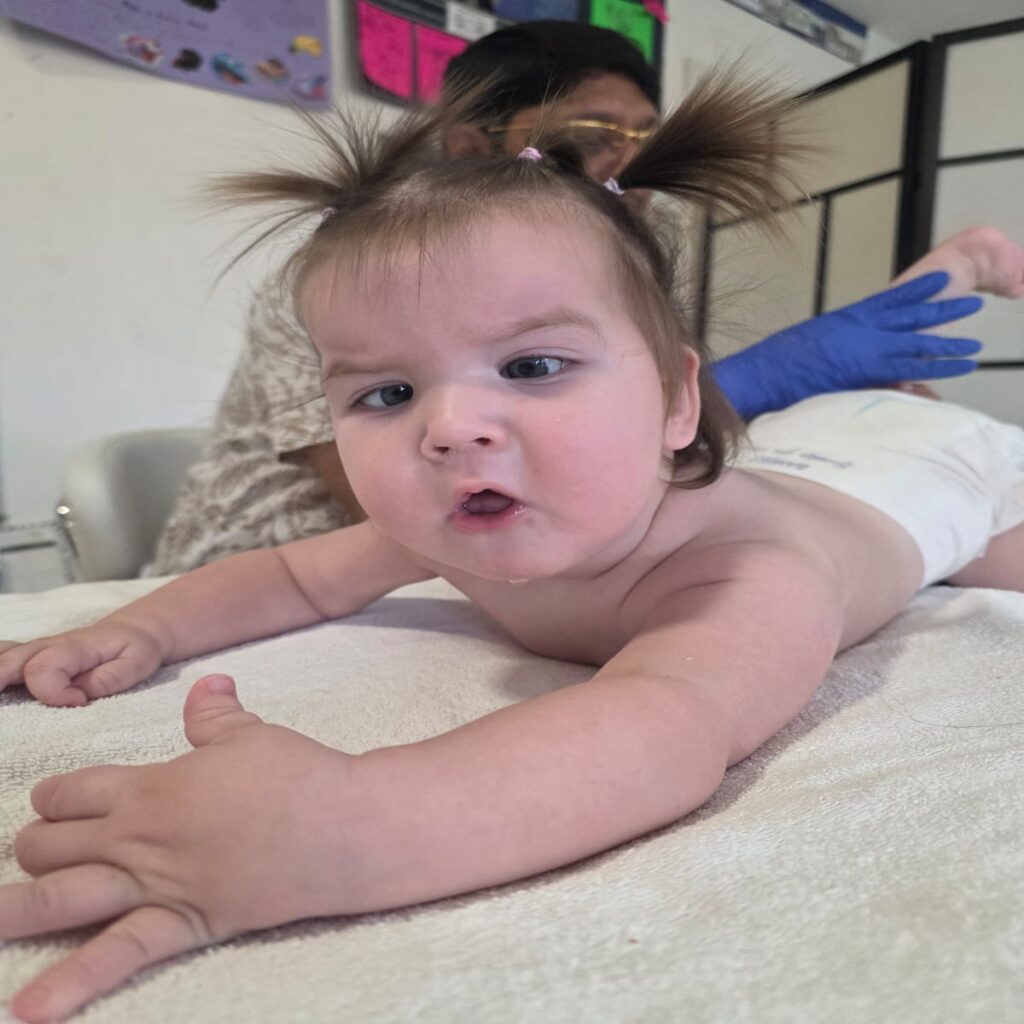
Ajda started becoming stronger. She was able to roll more easily and hold herself on her tummy with greater comfort and control. Even though these improvements were initially small, they were clear, measurable, and incredibly encouraging.
For the first time, we truly felt hopeful seeing her body respond positively.
How PIASTM Helped Relax Tight Muscles
Alongside therapy sessions, we were guided with home exercises focused on reducing stiffness in her muscles and arms. We also followed recommendations such as using magnesium cream to support muscle relaxation.
Within about a month after therapy, one of the biggest transformations became visible during sleep.
Before therapy, Ajda constantly kept her legs tightly positioned due to muscle stiffness. After PIASTM therapy, her muscles became significantly more relaxed, allowing her to comfortably stretch her legs while sleeping for the very first time.
These small moments meant everything to us.
Even Her Physiotherapist Saw Major Improvements
The improvements were not only visible to us as parents.
Ajda’s physiotherapist also noticed major changes in her muscle response and movement quality.
Previously, long warm-up sessions were necessary before Ajda relaxed enough to participate in exercises. After PIASTM therapy, her body became much more responsive, allowing therapy sessions to become smoother, more productive, and less physically stressful.
This improved muscle relaxation helped Ajda engage more actively during rehabilitation sessions.
From Limited Movement to Constant Exploration
Perhaps the most beautiful transformation was not just physical progress — it was Ajda’s desire to move.
Today, she almost never stays still.
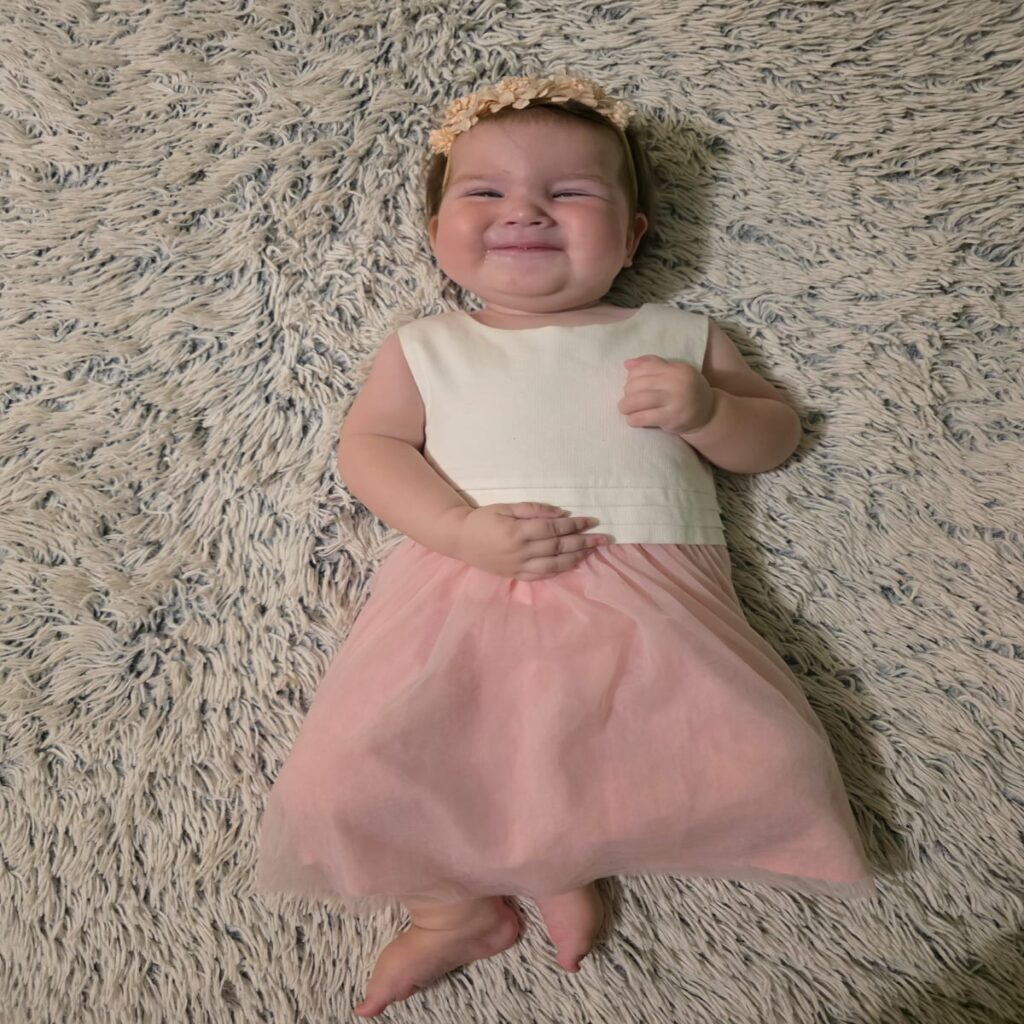
She constantly wants to explore, attempt new movements, and interact with her surroundings. Her increased mobility and curiosity have completely changed her personality during therapy sessions.
Ironically, therapies have now become more challenging because she is so active that we constantly have to hold her; otherwise, she would happily “run away” from us. 😊
Kanu often jokes that if she continues progressing this quickly, he may soon need a bigger therapy table. 😄
Stronger Every Single Day
So far, Ajda has attended PIASTM therapy three times.
Today, she is 1 year and 9 months old, and every single day she becomes stronger.
Every day she discovers a new movement.
Every day her body gives her more freedom.
And every day, we see more confidence in the way she explores the world around her.
For us as parents, that freedom means everything.
How PIASTM Therapy Supports Children with Neurological Conditions
PIASTM Therapy focuses on releasing soft tissue restrictions, reducing muscle tightness, improving fascia mobility, and activating weaker movement patterns.
Children with conditions such as:
- Spastic Cerebral Palsy
- Hypotonia
- HIE (Hypoxic Ischemic Encephalopathy)
- Developmental Delay
- Neuromuscular Tightness
- Postural Dysfunction
- Genetic Disorders
may experience movement limitations due to stiffness, fascia restrictions, and altered muscle tone.
PIASTM therapy aims to improve the body’s ability to move more naturally by addressing these underlying soft tissue restrictions.
Looking Ahead with Hope
PIASTM did not simply help loosen Ajda’s muscles.
It gave her the opportunity to discover movement, independence, curiosity, and confidence in ways we never imagined possible.
And based on the incredible progress we continue to see every day, we truly believe that crawling is coming very soon.
For parents searching for hope, progress, and better movement possibilities for their child, Ajda’s story is proof that early intervention and the right therapy approach can make a remarkable difference.
Final Thoughts
Ajda’s journey reminds us that progress in pediatric neurological rehabilitation is not always measured by giant milestones overnight — sometimes it begins with a small movement, a relaxed muscle, better posture, or the first sign of curiosity to explore the world.
Through PIASTM Therapy, Ajda gained more than improved mobility. She gained confidence, comfort, freedom of movement, and the ability to interact with her surroundings in ways that once seemed difficult.
For families navigating conditions such as Cerebral Palsy, HIE, developmental delay, or muscle stiffness, early intervention and the right therapeutic approach can play a powerful role in supporting a child’s movement potential.
Every child’s journey is unique, but stories like Ajda’s offer something incredibly important to parents everywhere:
Hope. And sometimes, hope is where transformation truly begins.